← All nine lensesE.M.O.T.I.O.N.A.L.04 / 09
T / State change

The lens

Transportative

Transportative chapter artwork
The essential question

When does their attention, body or identity cross into another world?

One-line definition

Move guests from the real world into the experience world, then bring them back changed.

What it asks

Use thresholds, sensory stacking, costume, theming, and emotional pacing to transport guests.

A closer look

Transportative work changes state. It gives the guest a credible route out of the everyday, then makes the return matter. This is not only scenic design. It is the accumulated effect of thresholds, sensory cues, pacing, staff behaviour, objects and recovery, all working together to move attention, body and identity into another world.

A guest does not arrive as a blank page. They arrive carrying the street, the queue, their phone, a bad day, a practical question and the social temperature of the people beside them. Transportative design takes that seriously. It asks where ordinary life begins to fall away, and whether the experience has earned the moment when a guest agrees to enter its world.

The threshold is rarely one spectacular door. It can be a sequence: the approach, a change in sound, a corridor, an airlock, a wristband, a host who speaks in a different register, an object that changes what the guest feels entitled to do. Those details tell the body that the rules have changed. They also need to work in queues, exits and operational edges, where the illusion is most easily punctured.

The aim is not constant intensity. A world becomes believable when it has pacing, contrast and room to recover. Plan a From-To-Back journey: how guests arrive, what carries them through, how they leave and what they take with them. The return threshold deserves as much care as the entrance. It is where the experience protects afterglow instead of dropping guests abruptly back into the real world.
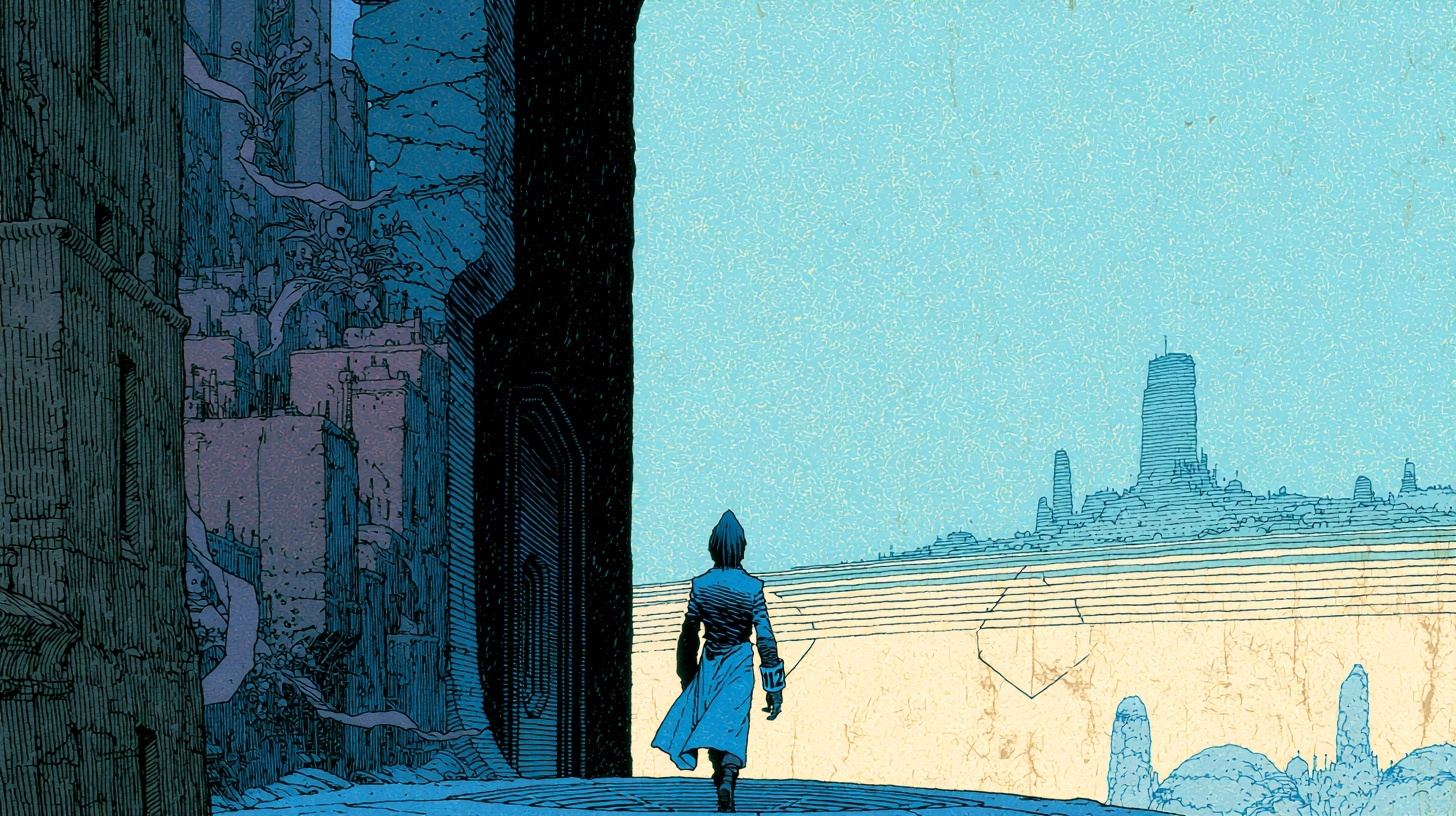
Transportative: A shared threshold: the world begins before the main room, when a guest is invited to cross.
A shared threshold: the world begins before the main room, when a guest is invited to cross.

Move guests from the real world into the experience world, then bring them back changed.

Core principles

What this lens protects.

01

Design the crossing, not just the destination

Arrival, queues, corridors, staircases, airlocks and exits are not neutral service space. They are the material of state change. Mark every point where a guest is waiting, uncertain or changing pace, then decide what it should do emotionally. A threshold can reduce the outside world, build anticipation, offer orientation or make a new identity feel possible. The work begins before the main room. If the crossing is accidental, the world has to work much harder once guests are inside.

02

Make one Sensory Chord

Sound, temperature, light, texture, scent, language and movement should support the same feeling. A sensory stack is not a list of effects. It is a chord. If every cue is trying to be the loudest or most surprising, the result is noise. Choose the emotional job of each major beat, then test whether every cue strengthens it. This includes ordinary objects such as barriers, bins, staff equipment and signs. The world is only as coherent as its least considered practical detail.

03

Recovery is part of the experience.

Peaks only work when people have somewhere to go afterward. Intensity is finite. Sustained stimulation, fear, effort and social exposure all draw from an Intensity Budget. Plot the journey from zero to ten and look for peaks that have no trough, or demands that arrive before guests have enough confidence. Recovery can include decompression, understanding, rest, reconnection, privacy, humour or restored agency. It makes an intense world safer, more memorable and ready for the next transformation.

04

Give guests a role inside the world

Costume, tokens, wristbands and guest-worn objects can do more than identify access level. They can change posture and permission. A guest who receives an object, a rule or a visible marker understands that they are not merely visiting a setting, they have a place within it. Use fuzzy signposting to pull them forward without over-instruction. The route should feel discoverable, but never leave a person unsure how to proceed, opt out or find their way back.

The tension

Immersion can become Liminal Debt

A threshold can create productive uncertainty. It can also create Liminal Debt: the accumulating discomfort caused by unclear waiting, blocked movement, poor information, social exposure or too much dwell time. The mistake is to call every difficulty part of the atmosphere. Guests can tolerate intensity when they understand what it is for and still feel agency. They do not need every answer, but they need to know what to do next.

Treat the operational reality as part of the world rather than a break from it. Design clear opt-outs, practical certainty and recovery into the journey. Then monitor where the fiction is asking too much of the body. The strongest version of transportative work does not trap a guest in a mood. It makes the passage feel chosen, holds them through the change and gives them a deliberate route back.

Signs of good work

What to look for in the room.

The street drops away

Guests can name a moment when everyday attention stopped dominating. It may be small, but it is legible: a sound change, an airlock, a host, a token or a first view.

The practical details belong

Signage, queues, staff language, barriers and equipment do not contradict the world. They carry its logic without making basic access or safety obscure.

People change posture

Guests move, speak, look and participate differently once inside. The environment and their role have given them permission to behave as part of the experience.

Intensity has breathing room

The journey includes troughs, recovery and a return threshold. Guests leave activated or changed, not simply depleted, overstimulated or abruptly released.

The return carries something

After the exit, guests retain a feeling, object, story or altered perspective. The real world returns, but the experience has not been wiped away by it.

Failure modes

What weakens the work.

The big reveal does all the work

A spectacular room cannot compensate for a practical, careless arrival. If every preceding moment feels like administration, the reveal is asked to manufacture immersion on its own. Build the state change through sequence.

Sensory pile-up

More sound, lighting, scent and texture do not automatically make a richer world. When cues carry unrelated emotions, guests feel managed rather than moved. Reduce, align and let one clear chord lead.

Confusion dressed as atmosphere

Unclear queues, missing information and inaccessible routes can be mistaken for mystery. They spend attention without returning meaning. Keep action clear, even when the world remains strange.

No way down

Experiences that only escalate leave no room for the body to reset. Without troughs, recovery and a considered exit, intensity turns into fatigue and the afterglow is punctured.

Tools and exercises

Put the lens to work.

Move from the editorial idea into the questions, checks and workshop material your team can use in the room.

Dual Lens / Way In

See it from both sides.

Guest

How does the guest feel themselves crossing from everyday life into the imaginary world?

Operator

What transitions, airlocks, costumes, wristbands, scenic details, and signposts make the world change feel believable?

Checklist

Pressure-test the work.

  1. 01

    Have we written the guest's From-To-Back emotional journey?

  2. 02

    Is there a clear threshold where the real world begins to fall away?

  3. 03

    Are arrival, queues, corridors, staircases, airlocks, and exits intentionally designed?

  4. 04

    Are we monitoring Liminal Debt caused by uncertainty, delay, discomfort, or dwell time?

  5. 05

    Does each sensory cue support the intended feeling, creating a Sensory Chord rather than noise?

  6. 06

    Is theming consistent down to signage, bins, barriers, staff language, and operational equipment?

  7. 07

    Do costume, tokens, wristbands, or guest-worn objects create identity inside the world?

  8. 08

    Does fuzzy signposting pull guests forward without unnecessary instruction?

  9. 09

    Have we planned peaks and troughs against a finite Intensity Budget?

  10. 10

    Is there recovery after sustained stimulation, fear, effort, or social exposure?

  11. 11

    Is the return threshold designed as carefully as the entrance?

  12. 12

    What does the guest carry into the afterglow?

Workshop / 60 minutes

Threshold, Sensory Chord, and Intensity Map

Design how guests cross into the experience, move emotionally through it, and return to the real world.

Exercise

Draw the full journey as thresholds, sensory cues, and changes in intensity.

Steps
  1. 1

    Complete the From-To-Back line: arrive feeling, move through, leave feeling, carry afterward.

  2. 2

    Mark every threshold and liminal space from street to exit.

  3. 3

    Note dwell time, uncertainty, discomfort, and potential Liminal Debt.

  4. 4

    Plot intensity from zero to ten across the journey.

  5. 5

    Assign the sensory cues at each major beat, then check whether they form one Sensory Chord.

  6. 6

    Add troughs, recovery, fuzzy signposts, identity objects, and a deliberate return threshold.

Prompts
  • Where does the real world end?
  • What is the first moment the guest feels transported?
  • What senses are playing, and are they playing the same emotion?
  • Where are we overspending the Intensity Budget?
  • How do we return the guest to the real world without puncturing the afterglow?
Workshop output

A From-To-Back line, threshold map, Liminal Debt audit, Sensory Chord plan, and intensity graph.

Reusable outputs

Leave with working material.

  1. 01Threshold map
  2. 02Sensory stack map
  3. 03Emotional journey graph
  4. 04Peaks and troughs plan
  5. 05Signposting plan
  6. 06Costume and guest object strategy
Field example
Squid Game: The Trials used layers of liminal spaces, a Korean-style night market, a black airlock, tracksuits, and custom wristbands to move guests into the game world.