← All nine lensesE.M.O.T.I.O.N.A.L.05 / 09
I / Co-authorship

The lens

Imagination Gaps

Imagination Gaps chapter artwork
The essential question

What can the guest complete better than we can?

One-line definition

Design the full world, but do not show every last detail.

What it asks

Leave intentional gaps for curiosity, debate, headcanon, and return visits.

A closer look

Imagination Gaps make room for the guest to complete the world. They do not mean withholding at random. The design team builds enough beneath the surface that an incomplete view feels charged, coherent and worth pursuing. Meaning may stay open. Action, safety and basic enjoyment must not.

A complete world does not need to show its whole hand. In fact, a world that explains every history, answer and intention gives a guest very little to do beyond receive it. Imagination Gaps create co-authorship. They leave room for curiosity, debate, headcanon and the kind of comparison that makes people return or keep talking after they leave.

The important distinction is between a gap and a hole. A gap suggests Unseen Completeness: a detail, clue, consequence or trace that proves something larger exists. A hole leaves the guest wondering whether anyone decided what matters. Design the full answer backstage, then choose what to reveal, hint at, hide and never explain. Secrets should be discoverable, but never mandatory for access, safety or basic enjoyment.

Calibration matters. Gap Width asks how much is withheld relative to a guest's confidence and knowledge. A cold guest, casual guest and confident expert do not need the same amount of certainty. Mystery Box Debt asks how many unanswered questions they are carrying. Every open question borrows attention. Service it with progress or a clue, repay it with a payoff, or make its continued openness feel intentional.
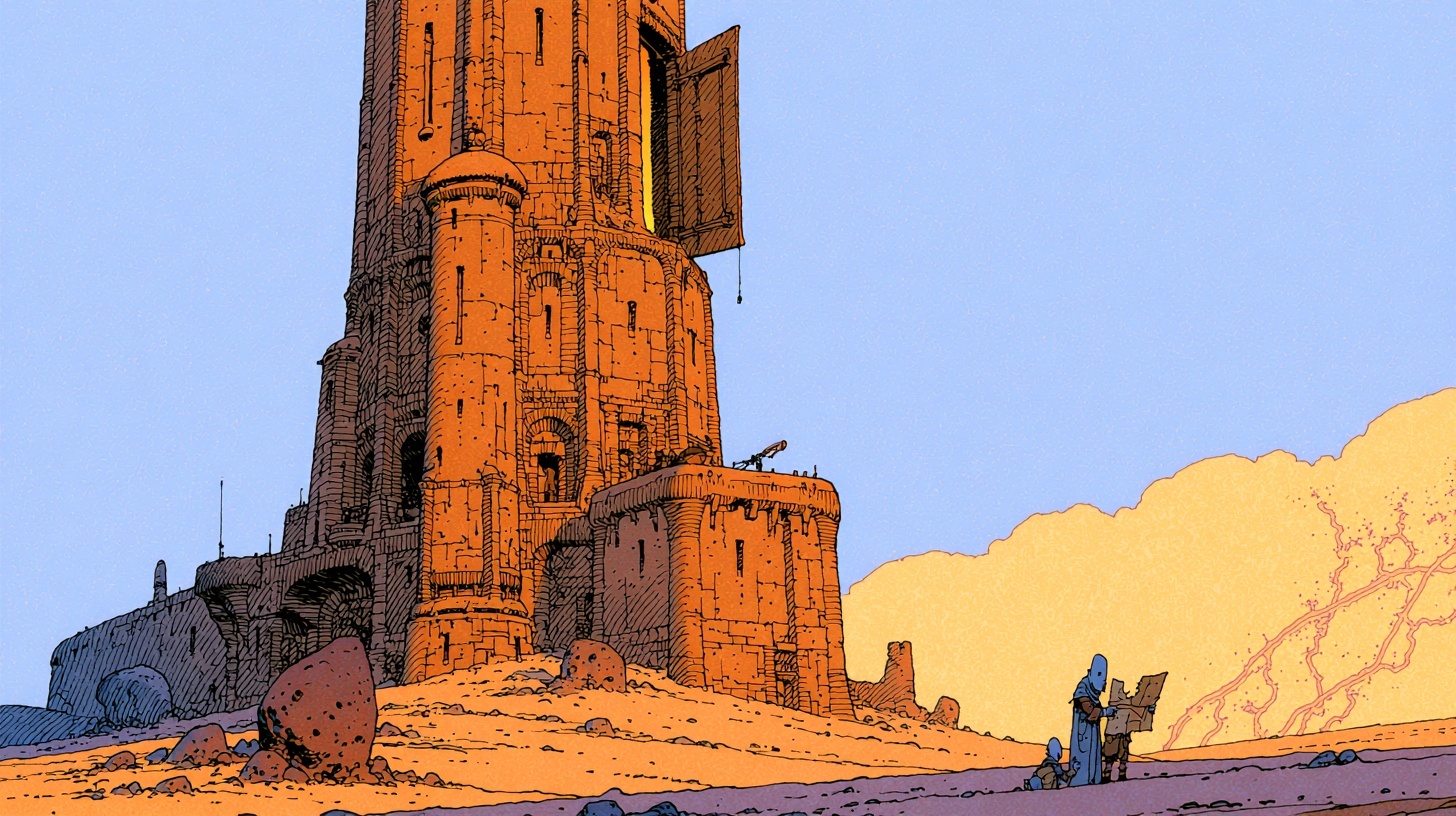
Imagination Gaps: An unseen floor: the gap is not emptiness, it is evidence that the world continues beyond the visible edge.
An unseen floor: the gap is not emptiness, it is evidence that the world continues beyond the visible edge.

Leave meaning unfinished, not action unclear.

Core principles

What this lens protects.

01

Build the answer backstage

A gap only works when it rests on a world with internal logic. Decide the history, mechanics, relationships and consequences even if guests never receive them directly. Then let architecture, objects, behaviour, sound or a fragment of text imply that work. This creates Unseen Completeness. The guest should sense that a larger world could withstand their attention. If the team cannot answer the question privately, withholding it publicly is not mystery. It is unfinished design.

02

Set the Gap Width

Too narrow means everything is explained. Too wide means a guest cannot tell what matters, what is intentional or how to act. Productive width offers enough certainty to move while leaving meaning open. Test the same gap with a cold guest, a casual guest and a confident expert. Let the width change as confidence, knowledge and stakes change across the journey. A detail that rewards a superfan can exclude a first-time guest if it controls a basic decision.

03

Service every question

Mystery Box Debt is the cost of unanswered questions. Track where each mystery opens, what clue or consequence services it, and whether it is repaid or deliberately left open as lore. One strong mystery can create energy. A stack of neglected mysteries turns curiosity into fatigue, then distrust. Close, combine or clarify weaker questions so the important ones can breathe. The aim is not to explain everything. It is to make every open question earn the attention it consumes.

04

Design for comparison

The most useful gaps create a reason to compare notes. They give one guest a detail another missed, a confident expert a deeper reading and a first-time guest a route to participate without embarrassment. Make discoveries optional, not a test of belonging. Leave one mystery for conversation, one for a second visit and one for people who want to go much deeper. This is how a world becomes a shared field of interpretation rather than a puzzle with one correct answer.

The tension

Mystery is not permission to be vague

Mystery is active. It directs attention towards something the guest can feel, trace or discuss. Vagueness does the opposite. It asks people to work without telling them whether their work will matter. That becomes especially costly in live environments, where time, confidence and social exposure are already in play.

Keep practical certainty visible. A guest can be unsure what a symbol means while still knowing where to go, how to participate, what they are consenting to and how to leave. The more demanding the gap, the more carefully it must be serviced. A question that stays open should feel like a gift the guest can carry, not a task the experience abandoned.

Signs of good work

What to look for in the room.

The world exceeds the view

Guests notice details that imply history, rules or relationships beyond the central scene. They feel there is more to discover, without needing a guide to explain every trace.

Guests compare notes

People debate what a detail means or share discoveries without anxiety about getting the one correct answer. The conversation adds to the world.

A cold guest can still move

First-time visitors know what matters and how to act. The gap offers invitation, not a test of prior knowledge or confidence.

Clues arrive with care

Open questions receive patterns, consequences, fragments or payoff over time. The experience is visibly carrying its mysteries, not forgetting them.

A second visit has value

Returning guests can find a new layer, reading or route without the first visit feeling incomplete or inadequate.

Failure modes

What weakens the work.

The empty mystery

A question is opened because mystery looks sophisticated, but there is no larger answer behind it. Guests eventually sense the difference between depth and avoidance. Build the answer backstage first.

The lore dump

The team fears confusion and explains every mechanism, history and clever connection. The guest is left with information but no interpretive role. Retain what helps action, then make space.

The expert-only door

A gap is calibrated for people who already know the world. New guests cannot tell what is intentional or how to join in. Keep discoveries optional and basic participation clear.

Debt default

Too many questions accumulate without clues, progress or payoff. The guest stops believing an answer exists, then stops investing attention. Reduce the open ledger before adding another secret.

Tools and exercises

Put the lens to work.

Move from the editorial idea into the questions, checks and workshop material your team can use in the room.

Dual Lens / Way In

See it from both sides.

Guest

What mystery makes the guest want to know more?

Operator

What should be fully designed backstage, but only partially revealed front-of-house?

Named tools

Calibrate the gap.

01

Gap Width

Too narrow explains everything. Too wide leaves the guest unsure what matters or how to act. Productive width gives enough certainty to move while meaning stays open.

Leave meaning unfinished, not action unclear.
02

Mystery Box Debt

Every open question borrows attention. Service it with clues, repay it with a payoff, or deliberately reframe it as lore before curiosity turns into fatigue and distrust.

Borrow → Service → Repay → Default
Checklist

Pressure-test the work.

  1. 01

    Have we designed the full answer backstage, even if guests never receive it?

  2. 02

    Does the visible world suggest Unseen Completeness?

  3. 03

    Is there room for interpretation, headcanon, and guest-authored meaning?

  4. 04

    Are we intentionally deciding what to reveal, hint at, distort, and withhold?

  5. 05

    Do mysteries create curiosity and conversation rather than block comprehension?

  6. 06

    Are we on the right side of the Mystery-Confusion Line?

  7. 07

    Have we calibrated the Gap Width for a cold guest, a casual guest, and a confident expert?

  8. 08

    Does the guest know enough to act even when the meaning remains incomplete?

  9. 09

    Does the gap widen or narrow deliberately across the journey?

  10. 10

    How many unresolved questions is the guest carrying at this point?

  11. 11

    Is every open question being serviced with a clue, progress, payoff, or practical certainty?

  12. 12

    Where might Mystery Box Debt turn curiosity into confusion, fatigue, or distrust?

  13. 13

    Which mystery could we close so a more important one has room?

  14. 14

    Can a first-time guest understand what to do without understanding everything that exists?

  15. 15

    Are secrets discoverable but never mandatory for safety, access, or basic enjoyment?

  16. 16

    Do different archetypes receive different depths of revelation?

  17. 17

    Is there a reason to compare notes, debate, or return?

  18. 18

    Are we resisting the urge to explain the cleverest parts?

Workshop / 45 minutes

Reveal, Conceal, and the Mystery-Confusion Line

Decide what guests need to know, what they can discover, and what should remain unresolved.

Exercise

Sort the world's information into reveal, hint, hide, and never explain.

Steps
  1. 1

    List the important truths, secrets, histories, mechanics, and Easter eggs in the experience.

  2. 2

    Sort them into reveal, hint, hide, and never explain.

  3. 3

    For each hidden element, write the clue that proves something larger exists.

  4. 4

    Test each gap against two questions: does it create curiosity, and can the guest still act confidently?

  5. 5

    Set the Gap Width for a cold guest, a casual guest, and a confident expert. Mark where the same withholding becomes invitation, reward, or exclusion.

  6. 6

    Decide whether the gap should widen or narrow as the guest gains confidence and knowledge.

  7. 7

    Build a Mystery Box Debt ledger. Mark where each question opens, how it is serviced, and whether it is repaid or deliberately left open.

  8. 8

    Find the point where unresolved questions peak. Close, combine, or clarify any mystery that turns curiosity into confusion.

  9. 9

    Add one mystery for conversation, one for a second visit, and one for superfans.

  10. 10

    Remove any explanation that closes a more interesting interpretation without helping the guest.

Prompts
  • What should guests never fully see?
  • What should superfans debate?
  • What is the secret sixth floor of this experience?
  • What detail implies a larger world?
  • Where might mystery accidentally become confusion?
  • Who is this gap the right width for, and who might it leave behind?
  • How many unanswered questions are we asking the guest to carry at once?
  • Which mystery has earned the right to remain unresolved?
Workshop output

A reveal-and-conceal plan, Gap Width map, Mystery Box Debt ledger, Mystery-Confusion audit, headcanon hooks, and return-visit mystery map.

Reusable outputs

Leave with working material.

  1. 01Mystery map
  2. 02Reveal and conceal plan
  3. 03Gap Width map
  4. 04Mystery Box Debt ledger
  5. 05Easter egg hierarchy
  6. 06Return-visit hooks
  7. 07Superfan debate prompts
Field example
Sleep No More’s legendary secret sixth floor created intrigue, debate, and a strong desire to return.