← All nine lensesE.M.O.T.I.O.N.A.L.02 / 09
M / Movement

The lens

Motivations

Motivations chapter artwork
The essential question

Why would they take the next step?

One-line definition

Understand why guests participate, continue, share, and care.

What it asks

Before the “how,” ask the “who.” Build around guest archetypes and emotional incentives.

Audience archetypes

Six ways into the same world.

These are arriving modes, not fixed personality types. A guest can move between them across the experience. Use them to replace the vague idea of a general audience with six distinct reasons to enter, participate, linger or hold back.

01 / The majority

Participant

Motivated by
Curiosity, belonging and openness to surprise.
How they behave
Engages willingly, follows cues and enjoys interaction when it feels easy and social.
What they bring
Fills the space with energy, creates social proof and turns visible enjoyment into advocacy.
Design for them
Build low-friction invitations, reward micro-participation and let them drift into greater depth without pressure.
02 / The one percent

Front Rower

Motivated by
Status, mastery and discovery.
How they behave
Engages deeply, returns, posts, decodes and debates. They want to be in the right place at the right time.
What they bring
Creates evangelism, drives conversation and legitimises the world for other guests.
Design for them
Feed hidden knowledge, layer the lore and create advanced paths that reward people who really know.
03 / The performer

Character

Motivated by
Transformation, escapism and performance.
How they behave
Dresses up, roleplays and shifts their language or behaviour to become part of the world.
What they bring
Makes the world feel inhabited and deepens the immersion for everybody nearby.
Design for them
Create accessible roleplay mechanics, costume or language cues and gentle invitations that make stepping in feel safe.
04 / The wanderer

Explorer

Motivated by
Discovery, contemplation and aesthetic satisfaction.
How they behave
Moves slowly, notices texture and detail, and may leave the main path to find hidden corners.
What they bring
Rewards quiet awe, creates a sense of depth and notices what other guests pass by.
Design for them
Use layered environmental storytelling, maps, artefacts, micro-lore, texture and discoveries that reward slow seeing.
05 / The social centre

Barfly

Motivated by
Connection, relaxation and familiarity.
How they behave
Finds the bar or social hub, lingers, chats and watches the experience happen around them.
What they bring
Sustains the social economy and makes the environment feel lively, relaxed and human.
Design for them
Make food and drink part of the world. Turn the social hub into a scene, gossip point, quest board or lore salon.
06 / The sceptic

Reluctant

Motivated by
Obligation, scepticism and a quiet hope that something might win them over.
How they behave
Observes critically and resists participation until they find a safe, credible emotional way in.
What they bring
Their movement from resistance to delight creates a powerful payoff for them and the group they arrived with.
Design for them
Offer self-directed discovery, humour, surprise and human warmth. Let them choose in instead of being forced in.
A closer look

Motivations asks why a person would take the next step. It turns participation into a series of clear, meaningful invitations, shaped around different guest archetypes and tested in the real world, so movement feels self-directed rather than extracted, forced or over-explained.

Before the how comes the who. A guest may arrive ready to lead, ready to observe, curious but cautious, there for the social invitation, or there because a world they care about has called them in. Motivations is the practice of understanding those different starting points, then giving each person a credible reason to enter, play, stay, tell a friend or return. It is about movement, but not movement for its own sake.

The framework offers a Play Ramp: watch, touch, choose, contribute, perform, transform. It is a reminder that participation has gradients. A Reluctant guest should not have to leap straight into performance to feel included. They need a small, safe invitation that can become a larger one if they wish. The right prompt can move a person from observer to participant, explorer, character or front rower without making the transition feel compulsory.

Good motivation mixes feeling, reward, social energy, narrative and useful mechanics, but it stays legible. Choice must create agency without triggering analysis paralysis. Progress can be visible without turning the experience into a machine. The work is to find what genuinely matters at each weak point, then playtest it at low fidelity with people outside the core team. The strongest route keeps a guest moving because they want to discover what happens next, not because the system has nowhere else for them to go.
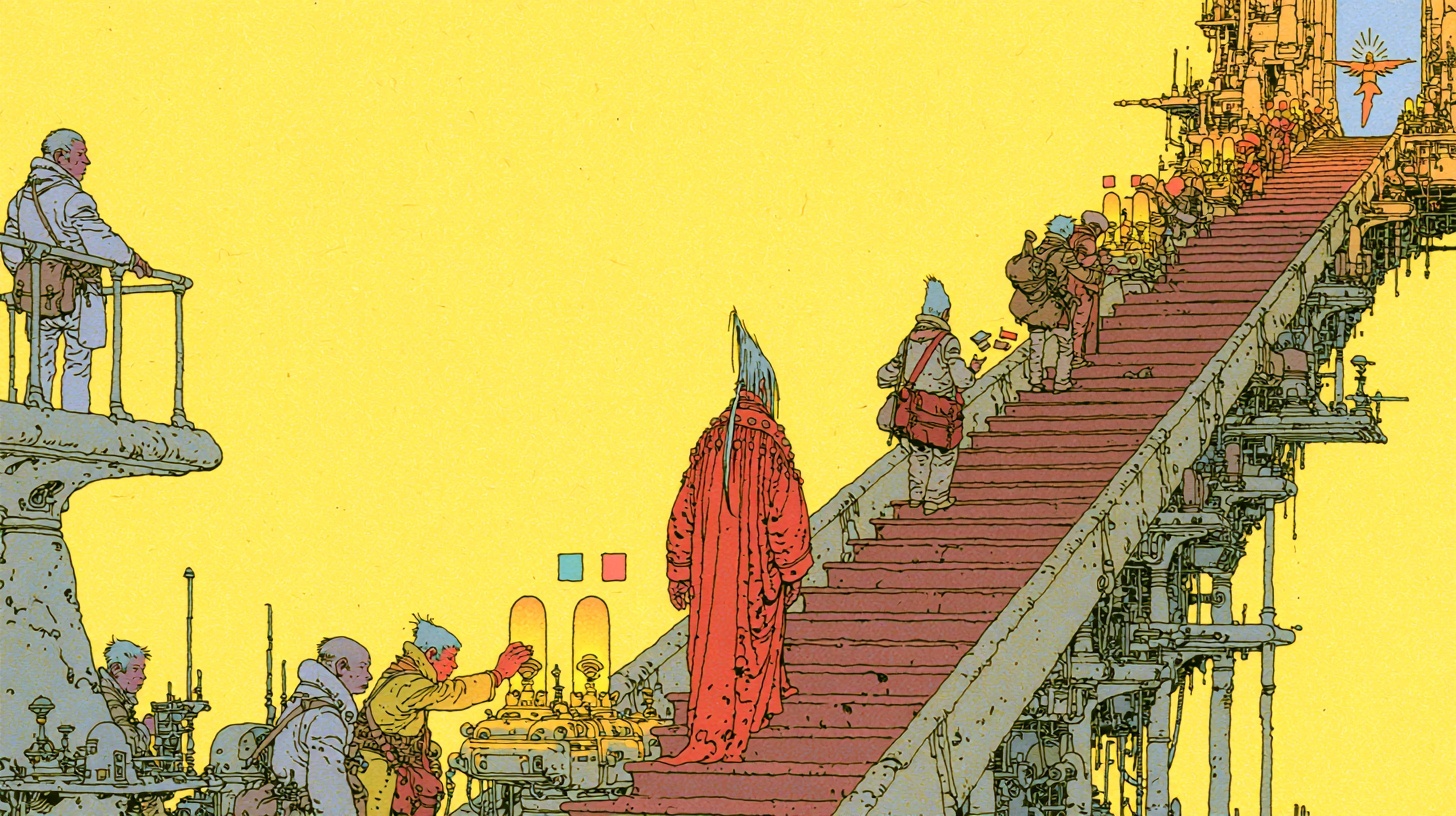
Motivations: The Play Ramp: a guest can watch, touch, choose, contribute, perform or transform, without being forced to skip the steps between.
The Play Ramp: a guest can watch, touch, choose, contribute, perform or transform, without being forced to skip the steps between.

The best invitation is small enough to accept and meaningful enough to change the next move.

Core principles

What this lens protects.

01

Begin with the arriving mode

Motivation is not a universal button. Identify the priority archetypes and the mode each may arrive in. One person wants a social reason to cross the threshold. Another wants recognition, progress, a role, a private discovery or a story they can carry away. Map what each guest wants before, during and after. Include the archetype the concept may neglect. This prevents a confident core audience from becoming the unspoken default and reveals where a Reluctant guest needs a smaller first invitation.

02

Build a ramp, not a cliff

Use the Play Ramp to give participation a sequence: watch, touch, choose, contribute, perform, transform. Each step should be optional, legible and emotionally proportionate. Watching can be a valid form of entry, not a failure to engage. Touching or choosing may be enough to create agency. Contribution and performance can follow once a guest has gathered confidence. The ramp lets people move at different speeds while still feeling the experience is responsive to them, rather than measuring them against one ideal level of enthusiasm.

03

Make the choice do something

A choice earns attention when it has a felt consequence. It does not need to radically alter the operation to feel personal. The Sock Principle is useful here: protect the system while giving the guest a choice that feels like theirs. Keep the options easy to understand, and make clear what changes because of them. When choices are too numerous, too vague or too expensive to process, agency becomes analysis paralysis. The aim is not maximum branching. It is a decision that helps a guest feel present in the experience.

04

Playtest the invitation

Motivational mechanics should be tested before they become expensive. Use low-fidelity playtesting with people outside the core team, then watch for the moments they freeze, opt out, lose focus or feel forced. Test what happens when a guest waits, loses or fails. These moments can either eject them from the journey or give them a reason to continue. Squid Game: The Trials used playtesting, multiple-choice moments and illusion-of-choice mechanics to keep movement alive while protecting the operation. The lesson is not to copy the game. It is to test the invitation honestly.

The tension

Agency without chaos

Experiences often ask for participation while quietly preferring compliance. Guests are invited to choose, but only if they choose the route already planned. This can still be useful when the choice is honest and the system gives something back. Problems begin when an invitation is framed as agency but feels compulsory, meaningless or socially risky. The guest becomes a resource for the idea rather than an active participant in it.

The opposite mistake is treating unlimited choice as generosity. Too many paths, rules or rewards make it hard to know where to start. A good motivation system protects the guest from that burden. It gives a clear next move, a felt return and enough room to shape the experience. The operator should know how the mechanics resolve. The guest should not feel the machinery. That balance is the real work: meaningful invitation on the surface, calm operational logic underneath.

Signs of good work

What to look for in the room.

A reason to begin

Each priority guest can name a low-friction reason to enter or start, whether it is curiosity, connection, recognition, a role or a simple invitation to see what happens.

The Reluctant has a route

Guests can watch or make a small choice before they are asked to contribute or perform. Participation grows through permission, not pressure.

Choices feel legible

Options are easy to understand and have a visible consequence, so a guest feels agency rather than the strain of analysing a complicated system.

Progress feels alive

Guests can sense movement through the experience without feeling processed by a game mechanic or pushed through a funnel.

The team has playtested

The invitation has been tested with people outside the room, including the points where someone waits, loses interest, fails or chooses not to continue.

Failure modes

What weakens the work.

Participation as a demand

When guests are pushed to perform before they have enough context or confidence, the experience makes social exposure the price of belonging.

The choice maze

An excess of options can look generous on a plan but create analysis paralysis in a live moment. The guest stops acting because the route is not clear.

Rewards without feeling

Points, prizes and mechanics may produce short-term movement, but they cannot replace a meaningful reason to care, return or tell someone else about the experience.

Untested enthusiasm

A mechanic that works for its creators can confuse, bore or embarrass everyone else. Without low-fidelity testing, teams mistake their own familiarity for guest motivation.

Tools and exercises

Put the lens to work.

Move from the editorial idea into the questions, checks and workshop material your team can use in the room.

Dual Lens / Way In

See it from both sides.

Guest

What makes this guest want to enter, play, stay, tell a friend, or share online?

Operator

What mechanics, rewards, choices, or prompts keep participation moving without creating analysis paralysis?

Checklist

Pressure-test the work.

  1. 01

    Have we identified the key guest archetypes and the mode each may arrive in?

  2. 02

    Do we know what motivates guests before, during, and after the experience?

  3. 03

    Are the motivators intrinsic, extrinsic, social, narrative, or a useful combination?

  4. 04

    Is there a low-friction reason to buy, enter, begin, continue, and share?

  5. 05

    Can a Reluctant safely become a Participant, Explorer, Character, or Front Rower?

  6. 06

    Does the Play Ramp allow guests to watch, touch, choose, contribute, perform, or transform?

  7. 07

    Are choices easy to understand and meaningful enough to create agency?

  8. 08

    Can a Sock Principle choice protect operations while still feeling personal?

  9. 09

    Is progress visible without making the experience feel mechanical?

  10. 10

    Have we playtested the motivational mechanics at low fidelity, with people outside the core team?

  11. 11

    Do failure, waiting, or losing give guests a reason to continue?

Workshop / 60 minutes

Motivation Path and Play Ramp

Design how different guests opt in, deepen their participation, and carry the experience forward.

Exercise

Map one motivation path for each priority archetype across before, during, and after.

Steps
  1. 1

    Choose three priority archetypes, including one that the current concept may neglect.

  2. 2

    Write what each wants before, during, and after the experience.

  3. 3

    Map the Play Ramp: watch, touch, choose, contribute, perform, transform.

  4. 4

    Mark where each archetype might freeze, opt out, lose focus, or feel forced.

  5. 5

    Add one intrinsic motivator, one social motivator, and one simple choice at each weak point.

  6. 6

    Identify choices that can use the Sock Principle and mechanics that require playtesting.

Prompts
  • Who are we trying to motivate at this moment?
  • Where do we need a reward, and where do we need a feeling?
  • What is the smallest safe invitation to play?
  • How could a Reluctant become an advocate?
  • What choice creates agency without adding operational chaos?
Workshop output

An archetype motivation matrix, Play Ramp, Sock Principle choice map, and playtest list.

Reusable outputs

Leave with working material.

  1. 01Guest archetype map
  2. 02Motivation matrix
  3. 03Playtest plan
  4. 04Reward and participation strategy
  5. 05Choice architecture notes
Field example
Squid Game: The Trials used heavy playtesting, multiple-choice moments, and illusion-of-choice mechanics to keep guests motivated while protecting operations.