← All nine lensesE.M.O.T.I.O.N.A.L.09 / 09
L / Continuity

The lens

Lore

Lore chapter artwork
The essential question

What makes the world feel as though it exists beyond this encounter?

One-line definition

Build the world beyond what the guest sees.

What it asks

Lore is the campfire layer: the stories, histories, objects, maps, language, and characters that make a world feel lived in.

A closer look

Lore is the campfire layer of an experience: the stories, histories, objects, maps, language, and characters that make a world feel lived in. It gives guests evidence that life was happening before they arrived and will continue after they leave, without asking an actor or text panel to explain every detail.

Lore begins where the central plot stops. It asks what happened before a guest arrived, what may happen after they leave, and what evidence of that life they can encounter along the way. A world gains depth when its power, conflict, rituals, language, rules, places, and objects feel connected rather than placed as decoration.

Objects are especially useful because they can carry story without stopping the journey. A prop becomes a Story-Bearing Object when it has an owner, a purpose, an age, wear, repair, emotional meaning, and a reason it remains. A scar, a phrase, a ritual, a map, a piece of food, or an architectural trace can do the same work. Guests can piece together meaning through the evidence around them.

Lore should support Narrative, not compete with it. It can offer different depths for Participants, Explorers, and Front Rowers, with discoveries that reward closer looking and second visits. The Campfire Test is the useful proof. If people can pass the world's stories to one another without the team present, the world has begun to exist beyond the encounter.
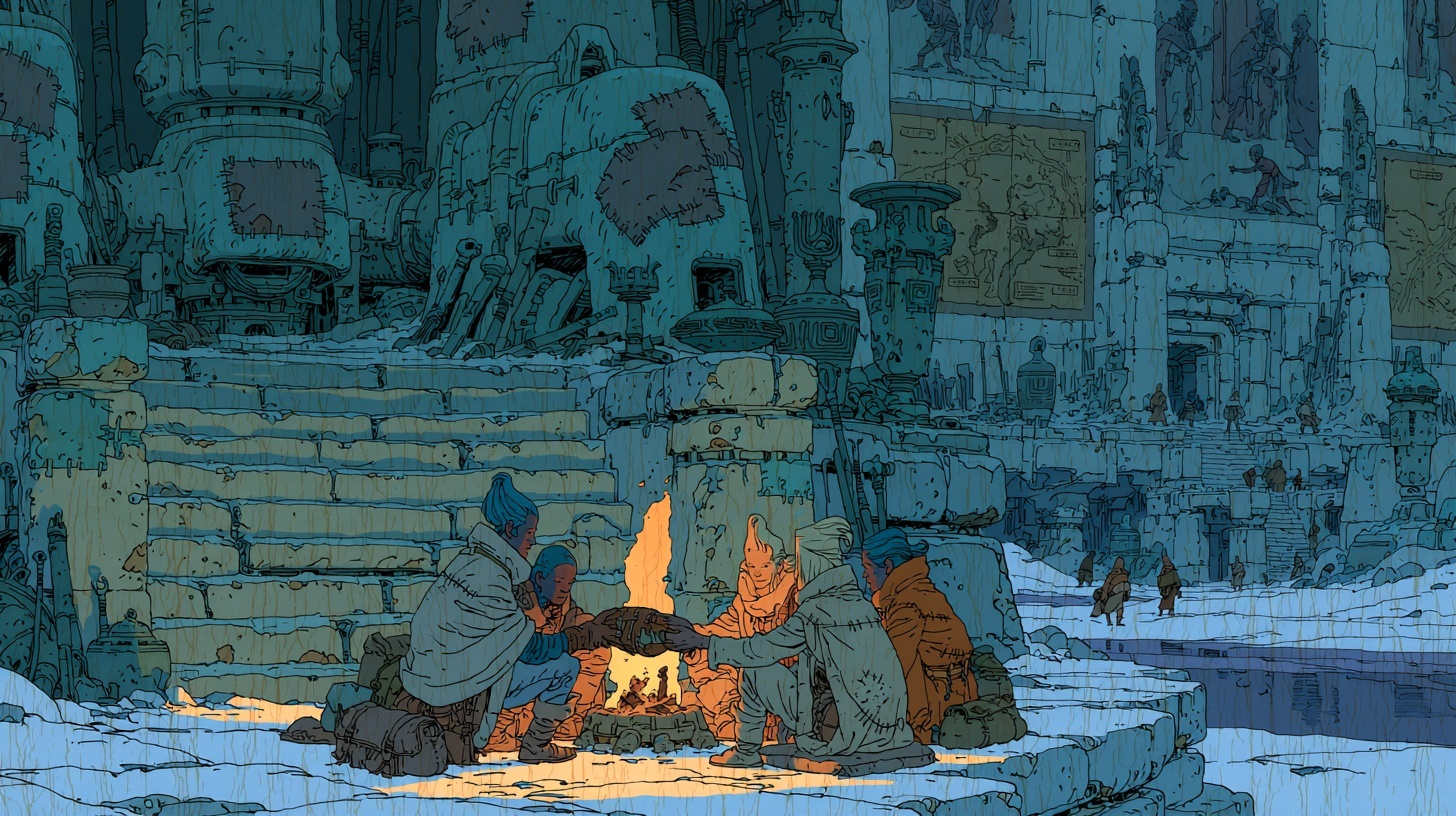
Lore: Objects, marks, and traces that suggest a world was already in motion before the guest arrived.
Objects, marks, and traces that suggest a world was already in motion before the guest arrived.

Build the world beyond what the guest sees.

Core principles

What this lens protects.

01

Design a past and a future

A world feels inhabited when it has consequences beyond the guest's visit. Write the events that shaped it before arrival, then consider what may happen after departure. This does not require an encyclopaedia. It requires a few connected facts that affect the present tense of the place: power, conflict, ritual, language, rule, repair, or absence. The guest should find evidence that the central plot is one part of a larger life, not the only thing that ever happened there.

02

Make objects carry weight

A Story-Bearing Object is more than a prop in a good location. Give it an owner, purpose, age, emotional meaning, and a reason it remains. Consider what its wear, damage, repair, or absence reveals. Then let the object imply a history without over-explaining it. This turns detail into an invitation. A guest can notice it quickly, while a returning guest can assemble a deeper account from the same evidence.

03

Distribute the evidence

Lore should not sit in one long text panel. Spread it across objects, language, behaviour, architecture, sound, food, character rules, maps, and institutions. This allows a guest to discover the world at their own pace. It also makes the work more operationally useful: staff and performers can hold enough of the logic to improvise consistently, while the environment continues to tell its story when no one is explaining it.

04

Give discovery different depths

Not every guest needs the same amount of lore. Participants, Explorers, and Front Rowers may encounter different layers, each sufficient for their mode of engagement. The aim is not to create a gatekeeping test for superfans. It is to make a second look meaningful. A Detail Dividend can reward someone who returns, compares notes, or notices a trace that another person missed, while the first visit still works without it.

The tension

World-building without homework

A world can become so eager to prove its depth that it starts demanding study. Guests are given names, dates, factions, maps, and explanations before they know why any of it matters. Lore turns into homework. The narrative loses momentum and the guest feels tested for not having the right level of knowledge. A lived-in world should invite curiosity, not make comprehension a condition of entry.

The opposite problem is decorative density. The room is full of old-looking things, invented words, or worn surfaces, but nothing connects. No object has a real relationship to another object, no rule has a consequence, and no detail survives the Campfire Test. Lore becomes set dressing. The discipline is to build a coherent system backstage, then reveal only enough evidence for guests to sense its life.

Signs of good work

What to look for in the room.

The world has traces

Guests can find evidence of events before their arrival: a repair, ritual, phrase, scar, object, institution, or absence. The environment suggests that life continues beyond the central plot.

Objects imply a history

Props have owners, use, wear, repair, or emotional meaning. They are connected to the world and invite a guest to infer something, rather than functioning as generic decoration.

Different people find different layers

The first-time guest can move confidently, while Participants, Explorers, and Front Rowers can discover deeper material. A return visit produces a real Detail Dividend without withholding basic enjoyment.

The team can sustain the world

Staff and performers know enough lore to improvise consistently. Character rules, language, and objects support the same logic even when the guest takes an unexpected route through the experience.

The campfire story travels

Guests compare notes, debate a detail, or retell what they think happened using the evidence they encountered. The world has become transmissible beyond the team and the room.

Failure modes

What weakens the work.

Decoration without consequence

The world contains maps, objects, language, and distressed surfaces, but none of them connect to power, conflict, ritual, people, or place. Details look meaningful from a distance but do not reward attention. Guests sense the absence of a system behind them.

Exposition does all the work

A team relies on actors or text panels to tell guests what every thing means. Discovery becomes passive explanation. The environment cannot carry its own history, and the guest has no opportunity to infer, compare notes, or build a personal relationship with the evidence.

Lore competes with narrative

Backstory becomes so extensive that the guest loses track of what is happening now and why their role matters. The world may be rich, but it is not helping the experience move. Lore must support the central narrative, not demand equal attention from every guest.

No Campfire Test

The details cannot be retold without the team explaining them. Guests may remember the look of the world, but not a story that travelled through it. The work has information, but it has not created continuity beyond the encounter.

Tools and exercises

Put the lens to work.

Move from the editorial idea into the questions, checks and workshop material your team can use in the room.

Dual Lens / Way In

See it from both sides.

Guest

What makes the world feel like it existed before the guest arrived and continues after they leave?

Operator

What backstory, items, maps, language, props, and character rules keep the world coherent?

Checklist

Pressure-test the work.

  1. 01

    Do we know what happened before the guest arrived and what may happen after they leave?

  2. 02

    Does the world have history, power, conflict, rituals, language, rules, and consequences?

  3. 03

    Are maps, characters, institutions, objects, and places connected rather than decorative?

  4. 04

    Do props behave as Story-Bearing Objects with owners, use, wear, repair, or emotional history?

  5. 05

    Does the environment contain evidence of lives continuing beyond the central plot?

  6. 06

    Can guests piece together meaning without an actor or text panel explaining everything?

  7. 07

    Is lore distributed across objects, language, behavior, architecture, sound, and food?

  8. 08

    Do staff and performers know enough lore to improvise consistently?

  9. 09

    Does the lore support the narrative rather than compete with it?

  10. 10

    Are there discoveries for Participants, Explorers, and Front Rowers at different depths?

  11. 11

    Does a second visit produce a meaningful Detail Dividend?

  12. 12

    Does the world pass the Campfire Test: can guests pass its stories to one another without us?

Workshop / 60 minutes

Story-Bearing Objects and the Campfire Test

Make the world feel as if it existed before the guest and will continue after them.

Exercise

Tell the history of the world through a small collection of objects and traces.

Steps
  1. 1

    Write five events that shaped the world before the guest arrived.

  2. 2

    For each event, create one surviving object, phrase, ritual, scar, repair, or environmental trace.

  3. 3

    Give each object an owner, purpose, age, emotional meaning, and reason it remains.

  4. 4

    Decide how Participants, Explorers, and Front Rowers encounter different layers of the story.

  5. 5

    Remove exposition and test whether the objects still imply a coherent history.

  6. 6

    Run the Campfire Test: ask someone to retell what they think happened using only the designed evidence.

Prompts
  • What happened here before guests arrived?
  • What object has witnessed the most important event in this world?
  • What does wear, damage, repair, or absence reveal?
  • What would a fan discover on a second visit?
  • What is the campfire story guests will pass on?
Workshop output

A backstory timeline, Story-Bearing Object set, layered discovery path, and Campfire Test findings.

Reusable outputs

Leave with working material.

  1. 01World bible
  2. 02Lore map
  3. 03Character and object guide
  4. 04Backstory timeline
  5. 05Detail inventory
  6. 06Guest discovery path
Field example
Dark Souls tells much of its world through item descriptions. That makes discovery feel rewarding and the world feel deep.