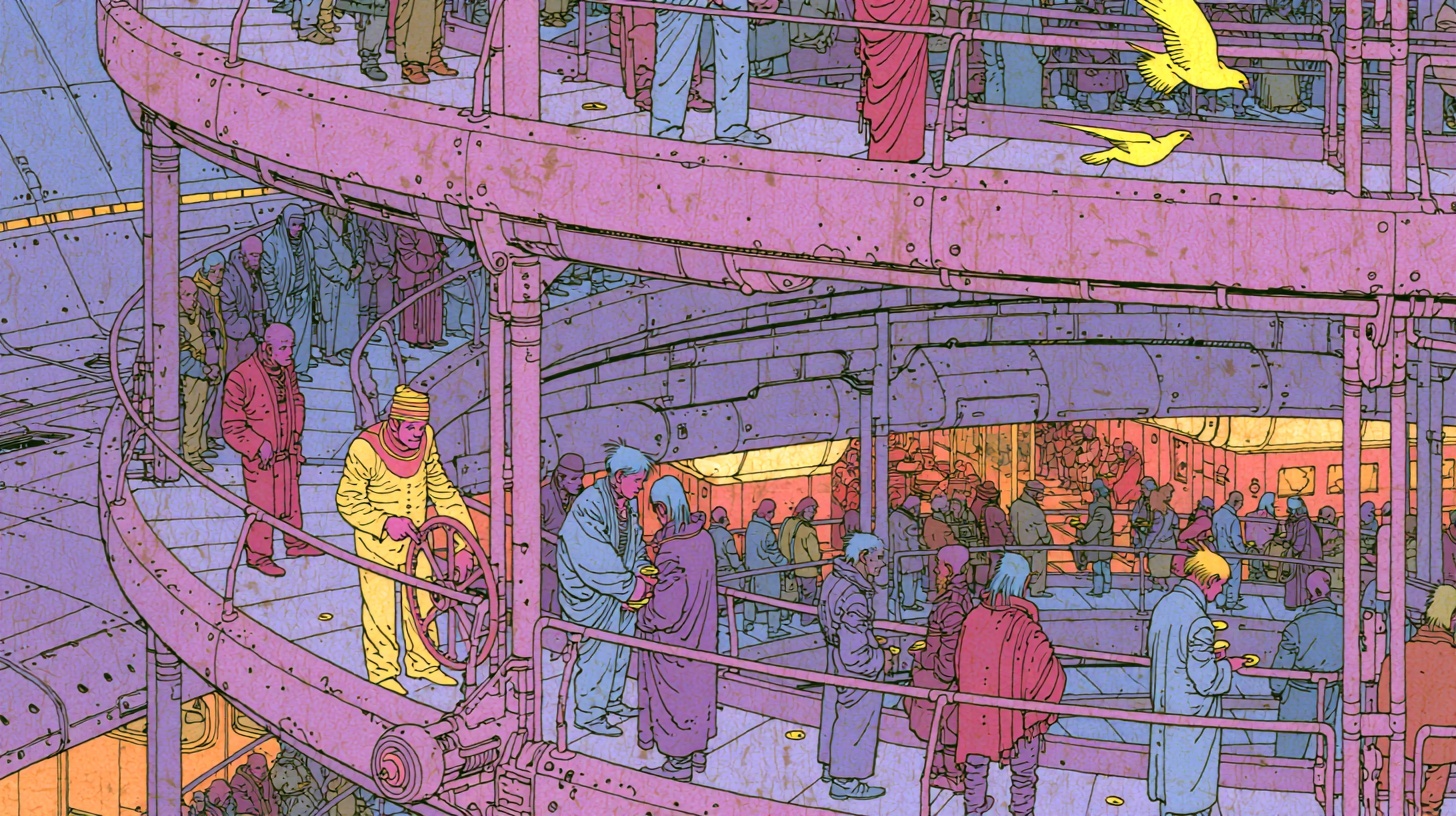
The most memorable turn in an experience often feels like an accident that was waiting for the right person. Alchemy names the work behind that feeling. It asks where performers and guests can be given permission, stages, and rules for permissive play. The team makes the rails, then leaves enough space for something human to happen within them.
This is not a case for chaos. A surprise needs to be legible enough to feel intentional rather than broken. A performer needs boundaries they can trust. A guest needs safety, accessibility, and a route to opt out. The framework calls these Alchemy Rails: permission, stage, trigger, judgment, and safety. Without them, a magic moment can become an operational problem with better lighting.
The material is often already in the journey. Waiting, repetition, dead time, predictable beats, and moments of emotional flatness can become opportunities for Queuechemy. The first move is to imagine the impossible version of a moment. The second is to ask what can actually be built that feels impossible. The third is to run it against ideal, absent, and unexpected responses.